Comparison guide

A best online video editor review for the work you do

The best online video editor review starts with your footage, deadline, and delivery channel—not a universal winner. Compare three common workflows, then test your preferred editor with a representative clip before committing a full project.

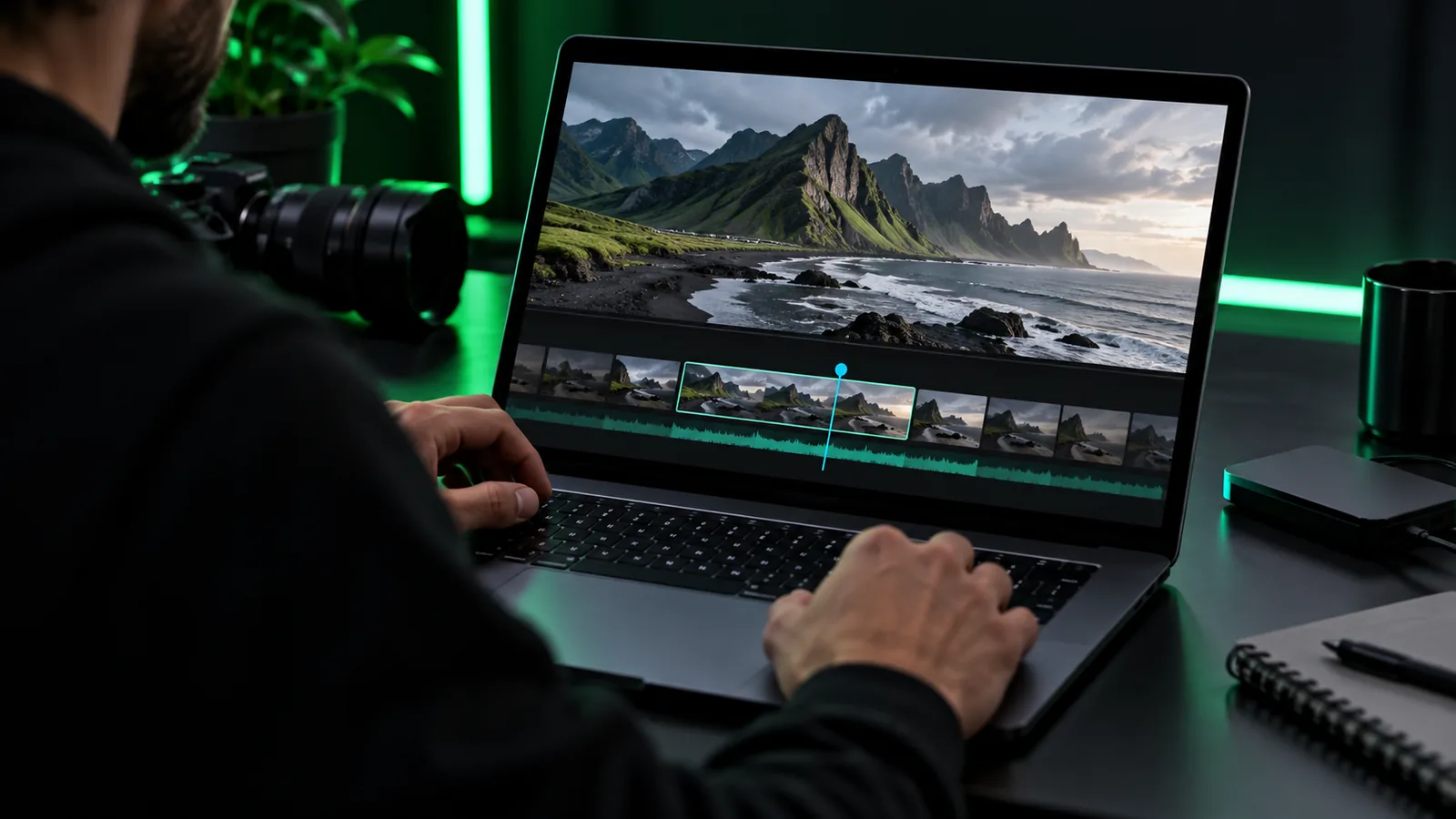
Onlinevideo landing-page visual

Scenario-by-scenario verdicts

These are workflow picks, not claims that every product in a category offers identical tools. The right review question is whether an editor handles your actual footage and intended export.

Browser editor for a short social clip

Pick this first for a modest project you need to open and revise across devices.

Works well

  • An online video editor can be convenient when installing desktop software would slow down a small edit.
  • A browser workflow is worth testing for a simple sequence of cuts, titles, and a final version for social sharing.
  • It is easier to assess an unfamiliar tool with one representative clip than with a complete campaign.

Trade-offs

  • Upload time may outweigh editing time on a slow connection or with large source files.
  • Available effects, export settings, and watermark rules vary by product; inspect the actual output.
  • Do not assume a browser tab will preserve unsaved work if the session closes.

Desktop editor for a long, layered video

Pick this when sustained timeline work and control over local media are the priorities.

Works well

  • Local files need not be uploaded before you begin arranging a large collection of footage.
  • A desktop workflow may suit repeated revisions, many tracks, and detailed audio work.
  • You can evaluate playback against the specifications of the computer you will actually use.

Trade-offs

  • Installation, storage, and hardware requirements can make a small one-off edit feel cumbersome.
  • Project files and media may need deliberate organization before you move between computers.
  • A desktop editor is not automatically simpler, faster to export, or cheaper than an online video editor.

YouTube Studio for a minor published-video fix

Check it first when the video is already on YouTube and the correction is narrow.

Works well

  • Working where the upload already lives can avoid rebuilding a complete edit for a small supported change.
  • It keeps the decision focused on correcting the published video rather than starting a new project.
  • You can compare the available adjustment with your original footage before choosing a full re-edit.

Trade-offs

  • It is not a substitute for planning a new multi-clip video from source material.
  • Editing options and eligibility can change; confirm the controls available for your particular upload.
  • A substantial creative revision may still require an external editor and a new export.

Capability matrix

Compare a browser-based online video editor with a desktop editor using the same source clip. These are testing criteria, not guarantees about any particular product.

Browser-based editor Desktop editor
Getting started Open the service and check its access requirements. Install or launch the application and check hardware requirements.
Source footage Check upload limits, transfer time, and supported files. Check local storage, codec support, and playback performance.
Timeline Test the number of clips and tracks your real edit needs. Test responsiveness with the full track count and source resolution.
Audio Check trimming, levels, music handling, and export playback. Check the same tasks plus any detailed mixing your project requires.
Collaboration Confirm sharing and permissions rather than assuming they exist. Confirm how project files and linked media move between collaborators.
Connection Test whether uploads and edits remain practical on your usual network. Check which features work locally and which still need a connection.
Final export Inspect resolution, file format, visible marks, and access conditions. Inspect render settings, output quality, and hardware load.

Shared pitfalls

A favorable review cannot replace a trial using your own material. Each route can fail for a different reason that a polished demo will not expose.

or

Option 1

Your connection is unreliable or the source files are large

Start by testing a desktop editor.

A browser-based online video editor may be pleasant to operate yet impractical if moving the footage takes longer than the edit. Include upload and retrieval time in your comparison.

or

Option 2

You have a short, straightforward clip and little time to set up

Test a browser editor with one complete export.

Judge the result, not just the preview. Look at sound, text legibility, aspect ratio, file quality, and any restrictions presented before the final download.

or

Option 3

The footage is already published and the change is small

Inspect the available YouTube Studio controls first.

If the needed correction is supported, a full re-edit may be unnecessary. Keep the original project available in case the platform cannot make the change you need.

Our tradeoff

Onlinevideo gives you a route to explore a video-editing product, not a verified winner for every job. This review does not certify the destination's features, access terms, or output.

1

No verified feature inventory

This page cannot confirm that the destination supports a particular effect, codec, collaboration mode, or maximum project size.

What to do instead

Check the current product interface with a small copy of your own footage before committing a larger project.

2

No guaranteed export conditions

A preview does not establish final resolution, watermark status, download options, or the conditions attached to an export.

What to do instead

Complete one representative export and inspect the file before choosing an online video editor for delivery.

3

No universal quality score

The same editor can feel capable on a short clip and strained on a long project; source files, connection, and hardware all affect the experience.

What to do instead

Repeat your review with footage, audio, captions, and a project length close to your actual assignment.

4

No substitute for rights checks

Editing footage does not grant permission to use music, images, or clips you do not control.

What to do instead

Confirm the rights for every asset before publication, regardless of which editor you select.

Test the workflow that fits

Start with a short copy of your real footage, make the edit you actually need, and inspect the resulting file. That hands-on review is more useful than selecting an online video editor from feature claims alone.

Put your shortlist to work

  • Use a representative source clip
  • Check the available editing controls
  • Inspect the final export
Explore video editing

Comparison FAQ

Look for evidence about source-file handling, timeline responsiveness, audio, and the finished export. A useful review also states which project it tested, because a short social clip and a long tutorial put different demands on an editor. Treat missing export details as a reason to run your own test.

Neither category wins every comparison. Browser access may suit a quick edit or a changing workstation, while desktop software can be a better starting point for large local media libraries and extended timeline work. Compare the time needed to import, edit, revise, and export your particular project.

A single winner is only meaningful when the reviewer explains the footage, task, and selection criteria. Check whether the review includes a finished-file assessment rather than screenshots of editing controls alone. If its use case differs from yours, treat the recommendation as a shortlist entry.

Make a small test using the same kind of footage, music, text, and aspect ratio as your planned video. Perform a revision after the first cut, then export and watch the file outside the editor. Record any access conditions or output limits you encounter so you can compare products on the same basis.

Start creating
Start creating